PARENT CHILD INTERACTION THERAPY (PCIT)
ESTABLISHED IN ORANGE COUNTY, ONLINE ACROSS CA, NC, & PSYPACT STATES
A personalized, practical path to harmony in your home.

If you’re exhausted from guessing how to help your child, dealing with the meltdowns, and feeling the tension in your household—you’re in the right place.
You’ve done your homework: play therapy, occupational therapy, parenting classes, gentle parenting podcasts, you name it. But nothing seems to stick, at least not for long. Maybe your pediatrician, neuropsychologist, or another therapist finally said, “You should look into PCIT.” And at this point, you need something that works—something structured, evidence-based, and actually effective in helping kids like yours.

Parent Child Interaction Therapy (PCIT) can help with…
Daily tantrums, meltdowns, aggression, defiance, or explosive outbursts that disrupt home and school life
Constant struggles around routines like bedtime, mealtime, or getting out the door
Early signs of ADHD, anxiety, or sensory sensitivities
Challenges with language or communication that lead to frequent blowups
Health-related challenges like feeding, toileting, diabetes care, and medical anxiety
Difficulty forming or maintaining secure attachments—especially related to foster care, adoption, or changes in family structure
Big emotions or withdrawn, clingy, or avoidant behavior following major life events like a medical procedure, family stress, or trauma

how PCit works
Hands-on support that combines the science of behavior with the heart of parenting.
-
Parent-Child Interaction Therapy (PCIT) is a short-term, research-backed method that helps families turn daily chaos into opportunities for connection. Originally designed for kids ages 2–7, PCIT is also adaptable for children up to age 11. This approach has been proven to outperform other kinds of child therapy in creating lasting behavior changes.
Unlike most therapies where the clinician works directly with the child, PCIT is built on the idea that you (the parent) are the agent of change. I’ll teach you practical skills that help your child feel more confident, cooperate more easily, and manage big feelings without falling into the same patterns. -
We start with an orientation and thorough history so I can learn about your child, your family, and your daily routines. In the first few sessions, I’ll guide you through a set of structured play scenarios while I observe and code what’s happening using PCIT’s specialized assessment system.
Behind the scenes, I’m tracking real numbers—how often certain skills are used, how your child responds, and the specific patterns that matter for long-term behavior change. Most parents find it reassuring to know that this isn’t guesswork, we’re gathering concrete data and using research-backed benchmarks to shape your treatment plan.
From there, I’ll teach you the exact skills your child needs, explain the “why” behind each one, and make sure you feel comfortable practicing them before we move into live coaching. -
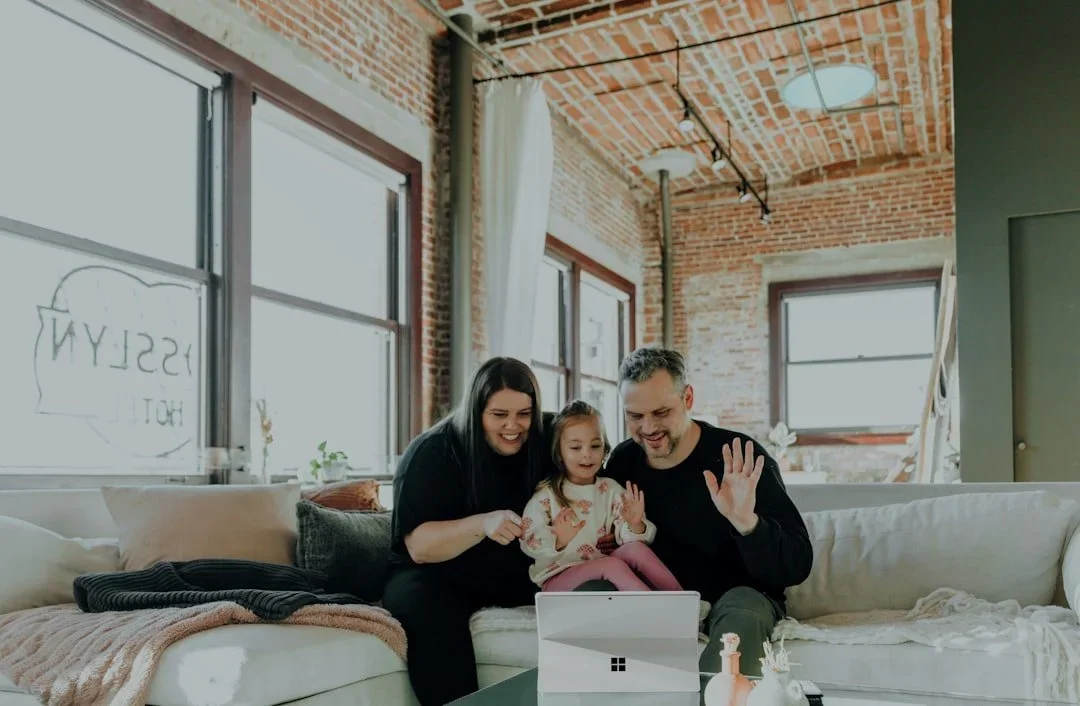
In each session, you and your child play while I observe and coach you through a small earpiece—offering real-time guidance on what to say, when to step in, and exactly how to apply PCIT skills in ways that build connection and cooperation. The beauty of doing this virtually is that all this takes place in your home, where you can follow your child from room to room with me still in your ear.
Many parents tell me this is the “lightbulb moment” when they finally understand the timing, tone, and language that make these strategies work. Between sessions, you’ll receive a written summary of your progress and action items for the week so you can practice what you learn for a few minutes each day. That way, you’ll never have to guess what to do next. -
PCIT unfolds in two phases. In the first, we focus on using positive attention and attunement to strengthen your relationship, calm the home environment, and boost your child’s self-esteem.
Once you meet those first goals, we pause and really look at what’s at the root of the behaviors you've been seeing. We review you and your child's remaining needs and challenges, figure out whether your child needs sensory coping tools, clearer boundary language, or other supports first, and build those in together. Only after those pieces are in place do we introduce limit-setting for the truly serious or safety-related behaviors. My approach is always compassionate, fair, and neuroaffirming—never compliance for the sake of compliance.
Most families complete PCIT in 12–20 sessions (3-5 months) and graduate once they’ve hit key skills benchmarks proven to predict long-term success. I’ll provide before-and-after data snapshots so you can see just how far you and your child have come. -
This approach works because it’s practical, measurable, and focuses on the relationship between you and your child. You’re not just talking about problems, you’re solving them live, in the moments that matter most. And because PCIT with me is done virtually, I can coach you right in your home—where your child’s daily life happens. You’ll have data that shows your child’s progress and the confidence that comes from knowing why it’s working.
Together, we’ll create results you can measure & relief you can feel — often in just a few months.
imagine a life where…
Your child’s behavior finally makes sense.
You understand what’s driving their meltdowns, and you know exactly what to do in the moment. The yelling, hitting, or tears that used to spiral out of control now calm down within minutes. You can actually see your child learning new ways to handle big emotions, and it makes you so proud to see how far you’ve both come.
The chaos that used to feel standard becomes more rare.
Bedtime, getting dressed, or leaving the house don’t end in battles anymore. School drop-offs and mealtimes run smoother, and your home feels calmer and more predictable. The tension that used to sit in your chest (you never realized just how heavy it was!) starts to ease, replaced by relief and confidence that you’re on the right track.
You can see real progress in your daily life.
Each week, you notice things shifting. Your child is listening more, following directions, and bouncing back faster when things don’t go their way. Teachers and relatives start to comment on the difference, and you have the data to see it, too. Those charts and milestones aren’t just numbers, they’re proof of the real breakthroughs you’re experiencing.
Your family feels more connected than ever.
Your child trusts you and you trust yourself to know how to handle whatever comes up, morning routines flow more easily, and every day you’re reminded why you love being a parent. You’re no longer reacting out of overwhelm, you’re leading with a calm self-assurance—and it shows. The changes you’ve made together don’t just make life easier, they create the kind of family life you’ve been hoping for all along.
Parenting can feel easier.
Experience less chaos, more calm, and change that lasts.
faqs
Common questions about PCIT
-
PCIT is a live coaching approach where I guide you through specific skills while you play or interact with your child. Instead of talking about what to do, I help you practice how to do it in real time—so the results stick at home, school, and beyond. You’ll see measurable progress each week and leave therapy confident using these specialized tools long after we’re done.
-
Every case is different, but most families start to see changes within just a few sessions. Standard PCIT usually takes 12–20 weeks depending on your child’s needs and how much you practice between sessions. We track progress using data and weekly goals so you always know what’s improving and what’s next.
-
Absolutely. PCIT is one of the few types of therapies recommended by the CDC and American Academy of Pediatrics for young children with ADHD or emotional regulation challenges. And as a mom who has neurodiversity in her family, I supplement traditional PCIT with sensory coping strategies that work with your child’s natural wiring to ensure we're being neuro-affirming in our approach.
-
That’s actually what makes PCIT so helpful: it’s built for kids who struggle with attention, cooperation, transitions, and structure. Basically, I watch from your webcam as the two of you interact and give you guidance in an earpiece as you play together. Because I’m coaching you from the sidelines, your child’s only job is to be themselves, even if that means running from room to room. We’ll work in periods of one-on-one play that reflect your real life, and I’ll guide you through exactly how to respond in those moments.
-
If you’re tired of guessing what might work and ready for practical, hands-on change, PCIT is likely a great match. It’s short-term, structured, and teaches skills that last for years. We’ll talk through your goals together to be sure it’s the best next step.
-
PCIT was originally designed for children ages 2 to 7. Now, PCIT adaptations are available that extend the age range from 12 months to 11 years old.
Certified PCIT therapists may specialize in some, but not all available age adaptations. If your child is under 3 years old, check out PCIT-Toddlers. And if they're over 7 years old, consider PCIT for Older Children.
-
Thank you for asking! As a healthcare provider, it’s important to send your patients understandable, up-to-date information on therapies that can help them with child behaviors efficiently and effectively.
I offer “PCIT Update” talks to primary care providers, neuropsychologists, and others who see children with behavior challenges. These learning opportunities include scripts to share with families, written report recommendation templates, & streamlined referral pathways. Learn more about speaking and consulting here.
Please share these printable resources with your clients, including this PCIT Infographic and blog series about PCIT.
If you want to refer a client, please contact me here.
What people are saying about PCIT
-
![Mother holding son at the beach. This represents family closeness after PCIT Therapy in Orange County, California, North Carolina, or PSYPACT States]()
"Working with Dr. Stutz has been a blessing for our family. I didn’t expect this therapy to be so effective, so quickly! My high-needs son is calming down faster, listening, and treating everyone kinder at home and school."
-Adoptive mother who completed PCIT
-
![Dr. Eve Nguyen, PhD Psychologist who gives positive review of Dr. Stutz's PCIT Therapy outcomes in California]()
"I can attest that Dr. Stutz's expertise in PCIT is unparalleled. Families have returned with only glowing reviews about their work, praising her as trustworthy, warm, engaging, and incredibly knowledgeable."
-Dr. Eve Nguyen, PhD
Pediatric Psychology Services Manager, Rady Children’s Health San Diego, CA
-
![Black & white photo of a child's hand in an adult's hand. This signifies the closeness and child behavior change that happens as a result of Parent Child Interaction Therapy in Orange County, CA, NC, & PSYPACT States]()
“I didn’t know it was possible to have this kind of bond with my daughter. Dr. Sabrina and PCIT-Toddler truly gave me the greatest gift of my life as a parent.”
-Father who completed PCIT-Toddler



Ready to get started?
Your family is worth it.
BOOK FREE CONSULT
BOOK FREE CONSULT
Established in orange county and offering virtual PCIT online across california, north carolina, and Psypact states.